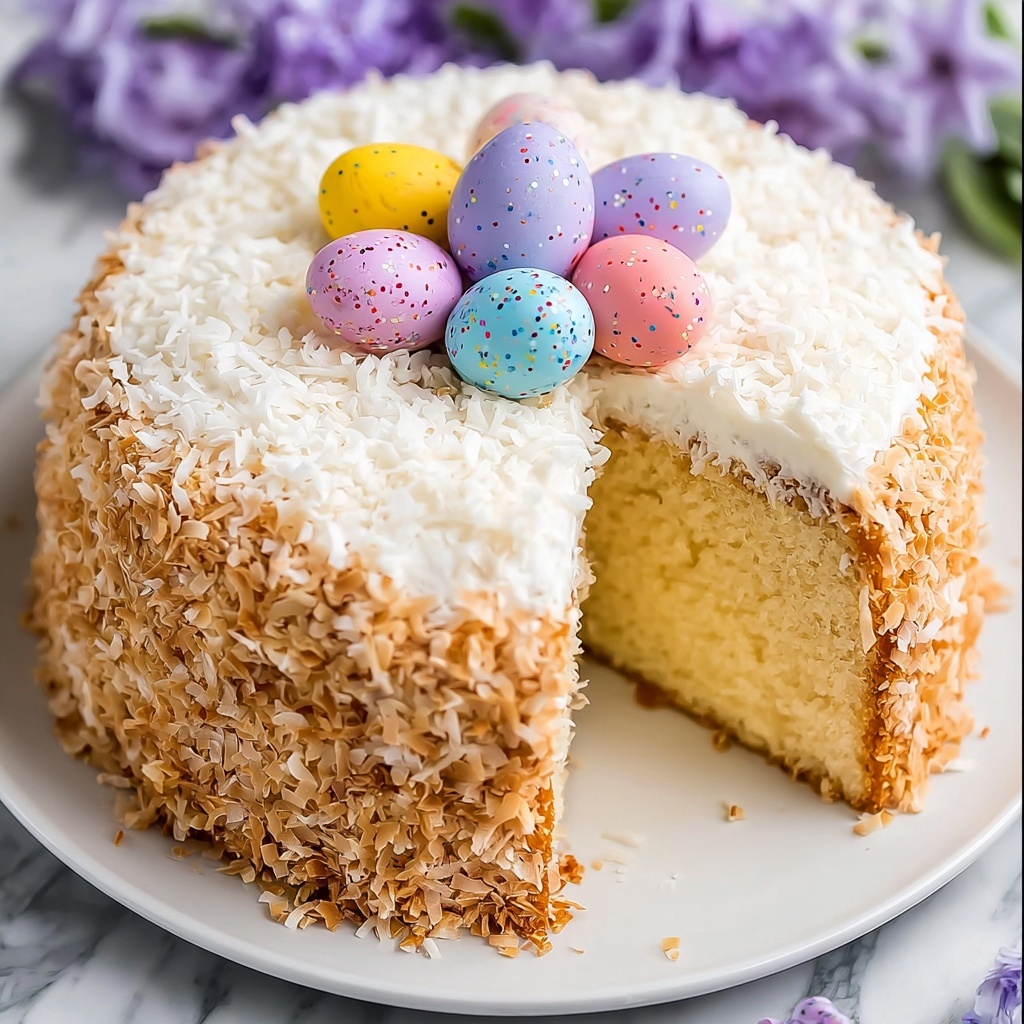
If you are looking for a joyful dessert to brighten your spring celebrations, this Lemon Coconut Easter Cake with Chocolate Eggs Recipe is absolutely the way to go. Imagine a tender, moist bundt cake that bursts with fresh lemon zest and creamy coconut flavors, all crowned with a luscious cream cheese frosting and a playful nest of colorful chocolate eggs right in the center. This cake strikes a perfect balance between citrus tang, tropical sweetness, and festive fun, making it a show-stopping centerpiece that everyone will rave about. Trust me, once you try this recipe, it will become a beloved tradition that fills your kitchen with warmth and smiles every Easter.
Ingredients You’ll Need
Gathering your ingredients is both simple and satisfying because each item plays a crucial role in making this cake so special. From the flour that builds the light structure to the fresh lemon juice that delivers zing, every component ensures a perfect harmony of taste, texture, and even color.
- Cake flour (3 cups / 360g): Creates a tender crumb by being soft yet structured for this delightfully airy cake.
- Baking powder (3 teaspoons): Helps the cake rise beautifully and keeps it fluffy.
- Baking soda (½ teaspoon): Works in tandem with sour cream for gentle leavening and softness.
- Salt (½ teaspoon): Enhances all the other flavors perfectly without overpowering.
- Unsalted butter (1 cup / 226g): Adds rich flavor and moisture; softened for easy creaming.
- Granulated sugar (1¾ cups / 350g): Sweetens and helps create a delicate crumb.
- Lemon zest (1 heaping tablespoon): Infuses bright, fragrant citrus notes into the batter.
- Vegetable oil (½ cup / 120ml): Ensures moistness and tenderness in every bite.
- Large eggs (5, room temperature): Provide structure and richness, making the cake robust and wholesome.
- Pure vanilla extract (2 teaspoons): Rounds out flavors with its warm, aromatic touch.
- Coconut extract (1 teaspoon): Amplifies the tropical coconut essence subtly but irresistibly.
- Full-fat sour cream or plain yogurt (½ cup / 120g, room temperature): Adds tang and moistness while reacting with baking soda for lift.
- Whole milk (⅔ cup / 180ml, room temperature): Keeps the batter smooth and light.
- Fresh lemon juice (¼ cup / 60ml): Brings fresh acidity that brightens and balances the sweetness.
- Sweetened flaked or shredded coconut (1 cup / 100g): Provides texture and that unmistakable coconut flavor.
- Full-fat brick cream cheese (8 ounces / 226g, softened): The base of the luscious frosting delivering tang and creaminess.
- Unsalted butter (¼ cup / 56g, softened): Creates a smooth frosting texture.
- Confectioners’ sugar (2 cups / 240g): Sweetens and stabilizes the frosting perfectly.
- Fresh lemon juice (1-2 tablespoons): Adds zing to the frosting for a refreshing finish.
- Pure vanilla extract (1 teaspoon): Balances the frosting’s flavor with warmth.
- Sweetened flaked or shredded coconut (1½ cups / 150g): Sprinkled on top for extra coconut joy and texture contrast.
- Candy-coated chocolate eggs (1-2 cups): Adds that festive Easter charm and a colorful surprise inside the cake.
How to Make Lemon Coconut Easter Cake with Chocolate Eggs Recipe
Step 1: Preheat and Prepare
Start by preheating your oven to 350°F (177°C). Greasing a 10 to 12-cup Bundt pan well is essential so your cake can bake evenly and release flawlessly once done. This early step sets the stage for a perfect bake.
Step 2: Mix Dry Ingredients
Whisk together the cake flour, baking powder, baking soda, and salt in a medium bowl. This ensures your leavening agents are distributed evenly, so your cake rises uniformly with a tender crumb.
Step 3: Cream Butter and Sugars
In a large mixing bowl, cream the unsalted butter with granulated sugar and fresh lemon zest until the mixture is light and fluffy. This aeration infuses your cake with a fantastic texture and citrus aroma that’s impossible to resist. Next, blend in the vegetable oil, then add eggs one at a time, mixing well after each addition to keep the batter perfectly emulsified. Stir in sour cream, vanilla, and coconut extracts to deepen the flavor complexity.
Step 4: Combine Wet and Dry Ingredients
Whisk together the fresh lemon juice and whole milk. Now, alternately add the dry flour mixture and the lemon-milk mixture into the wet ingredients. Mixing just until combined is key here to avoid overworking the batter, which keeps the cake light and tender. Finally, fold in the shredded coconut to introduce moist, chewy bites packed with tropical flavor.
Step 5: Bake the Cake
Pour your luscious batter into the prepared Bundt pan. Bake in the preheated oven for about 55 to 65 minutes until the cake develops a golden brown crust and a toothpick inserted in the center comes out clean. Let the cake cool in the pan for 2 hours before carefully inverting it onto a serving plate to cool completely. Patience during cooling ensures the cake sets perfectly.
Step 6: Make the Frosting
While the cake cools, whip up the cream cheese frosting by beating together softened cream cheese and butter until smooth and creamy. Gradually add the confectioners’ sugar, then stir in fresh lemon juice and vanilla extract until the frosting is fluffy and tangy—an incredible contrast to the sweet cake.
Step 7: Frost and Decorate
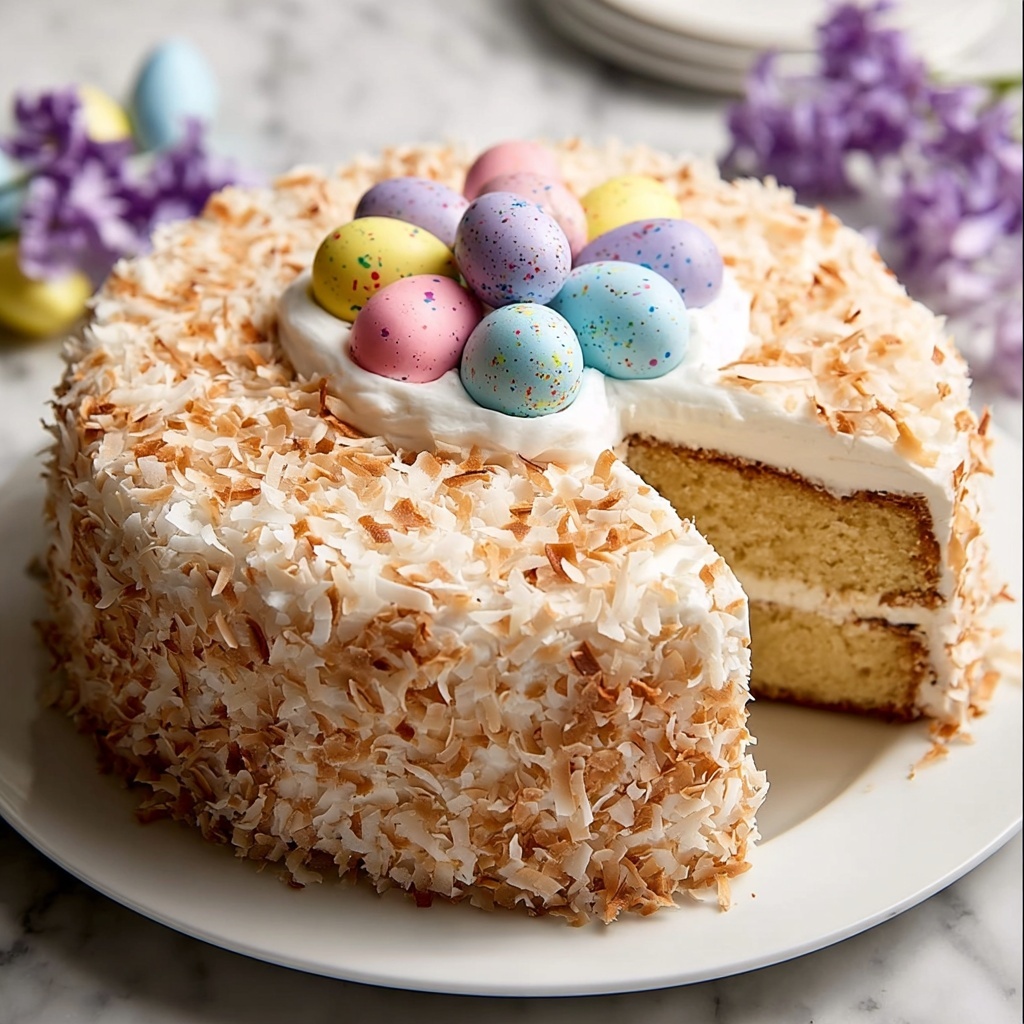
Spread the creamy frosting evenly over the cooled cake, allowing it to cascade naturally over the curves of the bundt shape. Sprinkle generously with shredded coconut for added texture and visual appeal. Then, fill the center hole with a charming nest of candy-coated chocolate eggs to bring that ultimate Easter magic that everyone loves.
How to Serve Lemon Coconut Easter Cake with Chocolate Eggs Recipe
Garnishes
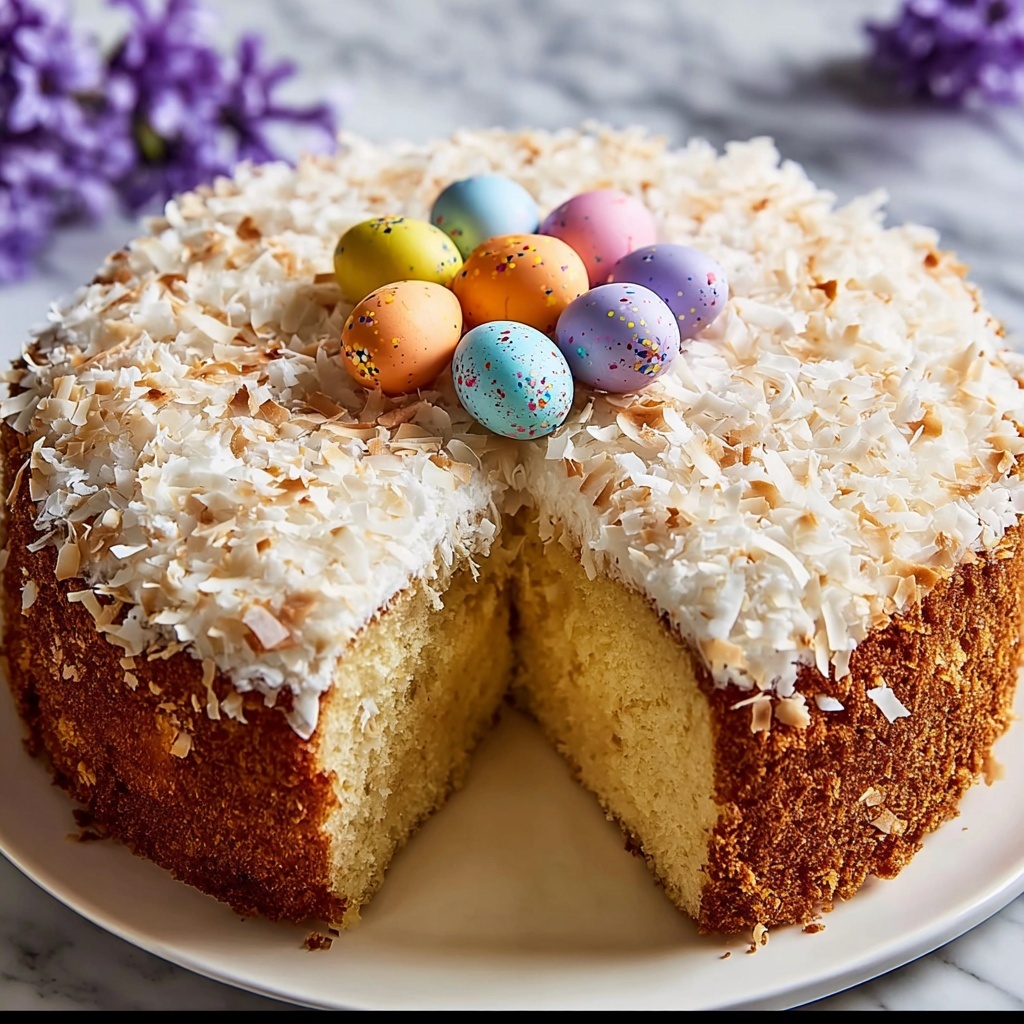
Fresh garnishes bring this Lemon Coconut Easter Cake with Chocolate Eggs Recipe to the next level. Additional lemon zest or small edible flowers can enhance the festive look, adding bursts of color and freshness. Toasted coconut flakes provide a lovely crunch, while the chocolate eggs add a colorful, playful centerpiece that’s irresistible to both kids and adults.
Side Dishes
Serve this cake alongside light, fresh sides to complement its citrusy richness. A bowl of mixed berries or a light fruit salad with mint works beautifully, balancing sweetness with brightness. A delicately brewed tea or a sparkling lemonade pairs perfectly, emphasizing the lemon notes and refreshing your palate between bites.
Creative Ways to Present
Presentation makes every celebration memorable. Try serving individual slices with a dollop of whipped cream and a few chocolate eggs on the side. For a brunch or party setting, trim thin slices into small, bite-sized servings on decorative platters. Using pastel-colored plates or rustic wooden boards can make the display even more inviting and festive.
Make Ahead and Storage
Storing Leftovers
You can cover your Lemon Coconut Easter Cake with Chocolate Eggs Recipe tightly with plastic wrap or keep it in an airtight container and store it in the refrigerator for up to 4 days. This keeps the cake moist and the frosting fresh while preserving all those bright lemon and coconut flavors.
Freezing
If you want to enjoy this beauty later, slice the cake first to make thawing easier. Wrap slices individually in plastic wrap and foil, then freeze for up to 2 months. When ready to enjoy, just thaw slices overnight in the refrigerator and bring them to room temperature for optimal flavor and texture.
Reheating
Though this cake is best served at room temperature, if you prefer it slightly warm, gently warm a slice in the microwave for about 10-15 seconds. Avoid overheating, especially because of the delicate cream cheese frosting, to keep the perfect balance of moist softness and creamy topping.
FAQs
Can I make this cake dairy-free?
Absolutely! You can substitute the butter, sour cream, cream cheese, and milk with dairy-free alternatives such as vegan butter, coconut yogurt, vegan cream cheese, and almond or oat milk. Just ensure your substitutes have similar consistency for the best results.
Is it necessary to use both lemon zest and lemon juice?
Yes, both components contribute distinct lemon flavors. Zest provides aromatic oils and intense citrus notes, while juice adds tang and moisture to the batter. Omitting one will lessen the overall bright lemon character of the cake.
Can I use shredded coconut instead of flaked?
Yes, you can use shredded coconut. Just keep in mind that shredded coconut is finer and might create a slightly different texture but will still impart delicious coconut flavor throughout the cake and on top.
How long does it take for the cake to cool before frosting?
After baking, it’s best to let the cake cool in the pan for about 2 hours before turning it out. Then, allow it to cool completely on a plate or rack before frosting, typically another 1 to 2 hours to prevent melting or sliding of the frosting.
Can I bake this cake in pans other than a Bundt pan?
Yes, this recipe can be baked in two 9-inch round cake pans as well. The baking time may vary slightly—usually about 35 to 45 minutes. Just keep an eye on it and test doneness with a toothpick.
Final Thoughts
This Lemon Coconut Easter Cake with Chocolate Eggs Recipe is one of those magical recipes that brings happiness and festive cheer right to your table. Its blend of zesty lemon, creamy coconut, and playful chocolate eggs capture the spirit of Easter with every bite. I can’t wait for you to try it and make it a staple in your family’s celebrations—because great cakes like this are worth sharing and enjoying time and time again!
Print
Lemon Coconut Easter Cake with Chocolate Eggs Recipe
- Prep Time: 30 minutes
- Cook Time: 1 hour 5 minutes
- Total Time: 4 hours (including cooling time)
- Yield: 12 servings
- Category: Dessert
- Method: Baking
- Cuisine: American
Description
This luscious Easter Cake features a tender lemon-infused Bundt cake layered with sweetened coconut and a creamy lemon cream cheese frosting. Adorned with candy-coated chocolate eggs, this festive cake is perfect for spring celebrations and Easter gatherings. The moist crumb and vibrant citrus flavors make it a delightful centerpiece dessert.
Ingredients
Cake
- 3 cups (360g) cake flour (spooned & leveled)
- 3 teaspoons baking powder
- ½ teaspoon baking soda
- ½ teaspoon salt
- 1 cup (226g) unsalted butter, softened
- 1 ¾ cups (350g) granulated sugar
- 1 heaping tablespoon lemon zest
- ½ cup (120ml) vegetable oil
- 5 large eggs, room temperature
- 2 teaspoons pure vanilla extract
- 1 teaspoon coconut extract
- ½ cup (120g) full-fat sour cream or plain yogurt, room temperature
- ⅔ cup (180ml) whole milk, room temperature
- ¼ cup (60ml) fresh lemon juice
- 1 cup (100g) sweetened flaked/shredded coconut
Frosting and Decoration
- 8 ounces (226g) full-fat brick cream cheese, softened
- ¼ cup (56g) unsalted butter, softened
- 2 cups (240g) confectioners’ sugar
- 1–2 tablespoons fresh lemon juice
- 1 teaspoon pure vanilla extract
- 1 ½ cups (150g) sweetened flaked/shredded coconut
- 1–2 cups candy-coated chocolate eggs (e.g., Cadbury Mini Eggs)
Instructions
- Preheat & Prep: Preheat your oven to 350°F (177°C). Grease a 10-12 cup Bundt pan thoroughly to ensure the cake releases easily after baking.
- Mix Dry Ingredients: In a medium bowl, whisk together the cake flour, baking powder, baking soda, and salt until fully combined.
- Cream Butter & Sugars: In a large mixing bowl, beat the softened butter, granulated sugar, and lemon zest together until the mixture is light and creamy. Add the vegetable oil and mix well. Then, add the eggs one at a time, beating well after each addition. Mix in the sour cream, vanilla extract, and coconut extract.
- Combine Wet & Dry Ingredients: In a separate bowl, whisk together the lemon juice and milk. Gradually add the dry ingredients alternately with the lemon-milk mixture into the wet ingredients, mixing just until combined. Avoid overmixing. Gently fold in the sweetened coconut flakes.
- Bake the Cake: Pour the batter evenly into the prepared Bundt pan. Bake in the preheated oven for 55-65 minutes or until the cake is golden brown and a toothpick inserted into the center comes out clean. Let the cake cool in the pan for 2 hours before inverting it onto a serving plate to cool completely.
- Make Cream Cheese Frosting: Beat the softened cream cheese and butter together until smooth and fluffy. Gradually add the confectioners’ sugar, fresh lemon juice, and vanilla extract. Continue beating until the frosting is creamy and spreadable.
- Frost & Decorate: Spread the cream cheese frosting evenly over the completely cooled cake. Sprinkle the top and sides with sweetened shredded coconut. Fill the center hole of the Bundt cake with candy-coated chocolate eggs for a festive finishing touch.
- Serve or Store: Serve the cake immediately or refrigerate it. If refrigerated, allow the cake to sit at room temperature for about 30 minutes before serving to bring out the flavors and soften the frosting.
Notes
- Use room temperature ingredients for better batter consistency and cake texture.
- Ensure the Bundt pan is well greased to prevent sticking.
- For a dairy-free option, substitute sour cream, butter, and cream cheese with suitable alternatives.
- Allow the cake to cool completely before frosting to avoid melting the frosting.
- The cake can be stored in the refrigerator covered for up to 3 days.
- Bring refrigerated cake to room temperature before serving for the best flavor and texture.