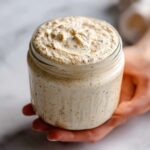
Description
This easy-to-follow sourdough starter recipe guides you through creating your own natural wild yeast starter at home, perfect for baking artisan breads. Using just flour and water, this recipe details the fermentation process over seven days to develop a bubbly, tangy starter that can be maintained long-term.
Ingredients
Scale
Starter Ingredients
- 1 cup (120g) whole wheat flour or all-purpose flour
- 1/2 cup (120g) filtered or distilled water (room temperature)
Instructions
- Day 1 – Mix Starter: In a clean glass jar or container, combine 1 cup of flour and 1/2 cup of water. Stir until smooth, scrape down the sides, then cover loosely with a lid or clean towel. Let it sit at room temperature (around 70°F) for 24 hours to begin fermentation.
- Day 2 – First Feeding: Check for bubbles indicating activity. Discard about half of the starter (approximately 1/2 cup), then add 1 cup flour and 1/2 cup water. Mix well, cover, and let sit at room temperature for another 24 hours.
- Days 3–6 – Daily Feedings: Continue this routine of discarding half the starter and feeding with 1 cup flour and 1/2 cup water every 24 hours. By days 5 or 6, the starter should be bubbly, double in size, and have a pleasant tangy aroma.
- Day 7 and Beyond – Ready to Use: Once your starter consistently rises and falls predictably, it is active and ready for baking. You can now store it in the refrigerator and feed it once a week to maintain its activity.
Notes
- Always use filtered or distilled water to avoid chlorine, which can inhibit fermentation.
- Whole wheat flour helps jumpstart fermentation but you may switch to all-purpose flour after day 3 if preferred.
- Feed your starter with equal weights of flour and water for optimal results.
- Keep the starter loosely covered to allow airflow but prevent contaminants.